HOW TO CHOOSE A HAIRCUT THAT WORKS WITH YOUR LIFESTYLE
A practical salon guide to choosing length, shape and maintenance around the way you really live.
The best haircut is not only the one that looks beautiful in a photo. The best haircut is the one that feels like you on an ordinary day. It should suit your routine, your face shape, your hair texture, your styling habits and the amount of time you actually want to spend getting ready.
Many people choose a haircut by looking at a reference image online. That can be helpful, but a good haircut is more personal than that. The same cut can look completely different on straight hair, wavy hair, curly hair, thick hair, fine hair or chemically treated hair. That is why a thoughtful consultation is the most important first step.
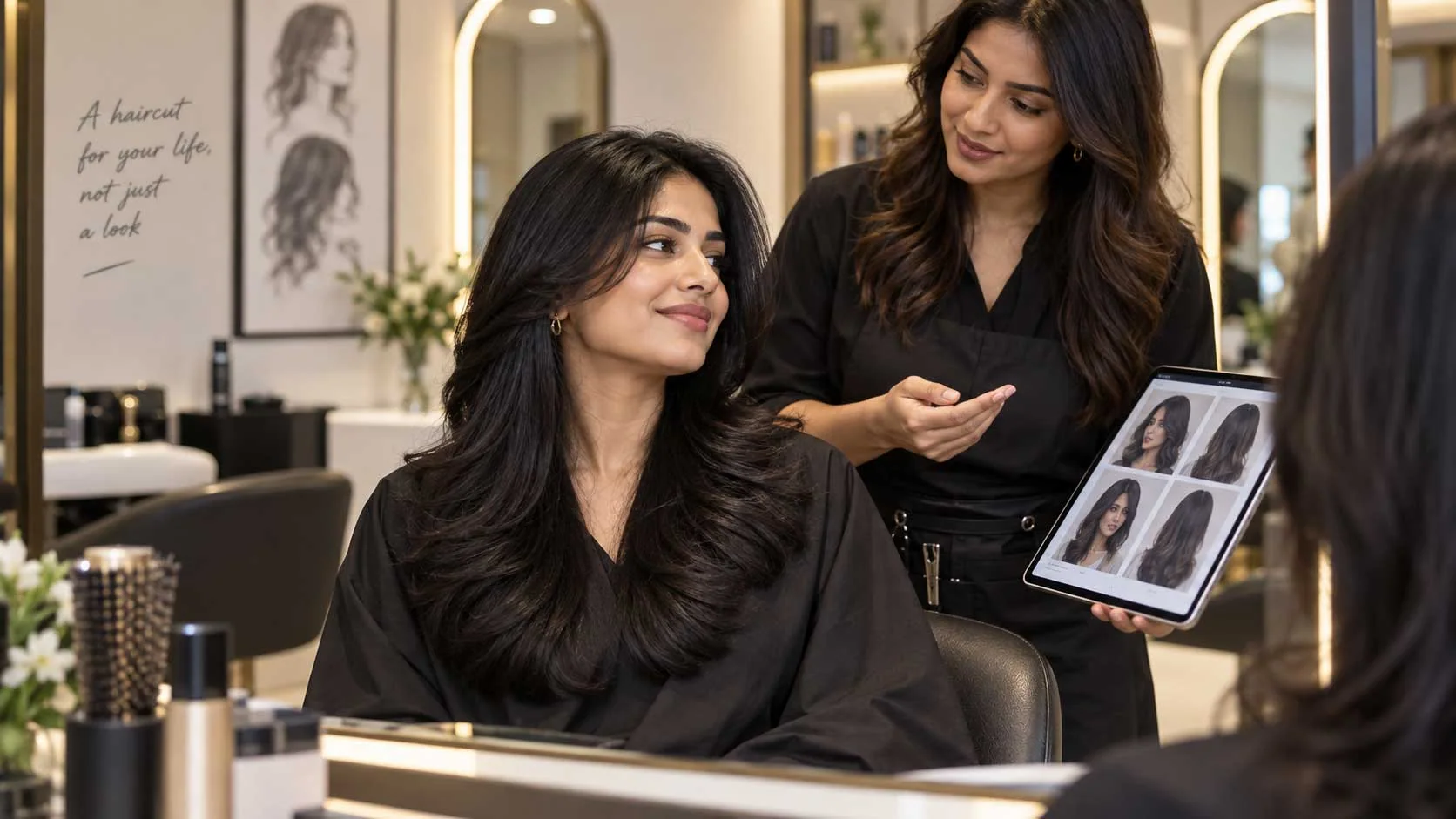
At CP Salon, the goal is to understand how you live with your hair every day and then suggest a cut that works naturally with your lifestyle.
BRING YOUR ROUTINE TO THE CONSULTATION
Before choosing a haircut, start by telling your stylist about your real routine. This helps the stylist understand what kind of shape, length and finish will be practical for you.
Tell your stylist how often you wash your hair, how much time you spend styling, whether you use a hair dryer or straightener, and whether you prefer a very polished look or a more natural finish. Also mention what you like and dislike about your current haircut.
For example, some people want a haircut that looks perfect after blow-drying. Others want a cut that settles well even without heat styling. Some clients want volume at the crown, while others want to reduce heaviness. These small details make a big difference.
A good consultation turns your daily habits into a haircut that feels easy to manage.
THINK ABOUT YOUR HAIR TEXTURE
Your hair texture plays a major role in how a haircut will look after you leave the salon.
Straight hair often shows sharp lines clearly, so blunt cuts, clean bobs and structured layers can look very polished. Wavy hair usually needs movement and shape, so soft layers can help the waves fall better. Curly hair needs careful weight balance because too much cutting in the wrong place can disturb the natural curl pattern.
Fine hair may need a shape that creates fullness, while very thick hair may need weight removal so it does not feel heavy or bulky. Dry or frizzy hair may need a softer cut with less harsh layering, while smooth hair can carry sharper shapes more easily.
This is why the same haircut should never be copied blindly. It should be adapted to your natural hair behaviour.
CHOOSE LENGTH ACCORDING TO YOUR DAILY LIFE
Length is one of the biggest decisions in a haircut. Long hair gives more styling options, but it may need more care. Medium-length hair is often the most practical because it gives movement while still being easy to tie or style. Short hair can look very stylish, but it may need more frequent salon visits to maintain the shape.
Before cutting your hair shorter, think about your daily needs. Do you need to tie your hair for work, gym, travel or daily comfort? Do you prefer open hair most of the time? Do you want a cut that works with Indian weather, humidity and busy routines?
A haircut should not make your day harder. It should make styling easier and help you feel confident with less effort.
THINK ABOUT MOVEMENT AND MAINTENANCE
Layers can create movement, volume and softness. They can make the hair look lighter and more stylish. But layers also need to be planned carefully.
Too many layers can make thin hair look thinner. Very short layers can become difficult to manage if your hair is frizzy or wavy. On the other hand, no layers at all can make thick hair feel heavy and flat.
A clean outline can make a short or medium haircut look polished. Soft layers can add flow. Face-framing layers can highlight your features. Long layers can give movement without reducing too much length.
Always ask your stylist how the haircut will look after four to six weeks. This helps you choose a realistic maintenance plan instead of only focusing on how it looks on the first day.
MATCH THE HAIRCUT WITH YOUR FACE SHAPE
Face shape should guide the haircut, but it should not limit your choices completely. A good stylist does not simply say that one face shape can only have one type of haircut. Instead, the stylist uses length, volume, layers and framing to balance the overall look.
For a round face, soft face-framing layers or length below the chin can create a more elongated effect. For a long face, volume near the sides or soft layers can create balance. For a square face, softer edges can reduce sharpness. For an oval face, many styles can work, but the final choice should still depend on hair texture and lifestyle.
The aim is not to hide your face shape. The aim is to create a haircut that enhances your natural features.
BE REALISTIC ABOUT STYLING TIME
One of the most common reasons people feel unhappy with a haircut is because the style requires more daily effort than expected.
Some cuts look amazing when professionally blow-dried, but they may not fall the same way without styling. Some fringes or bangs need daily setting. Some layered cuts need a little product or heat styling to show movement properly.
So before choosing a haircut, ask yourself honestly:
How much time do I want to spend on my hair every morning?
If your answer is five minutes, choose a low-maintenance shape. If you enjoy styling, you can explore more detailed layers, fringes, volume cuts or textured looks.
A haircut should match your real routine, not an ideal routine that you may not follow every day.
CONSIDER YOUR WORK, EVENTS AND PERSONAL STYLE
Your haircut should also match your personal and professional life.
Someone who works in a formal environment may prefer a clean, polished and easy-to-manage style. Someone with a creative lifestyle may enjoy more texture, layers or a bold shape. Someone who attends regular events may want a haircut that can be styled in multiple ways.
Also think about your clothing style. Minimal, classic fashion often pairs well with clean haircuts. Soft feminine outfits may suit layered and flowy hair. Bold personal style can carry sharper cuts and strong shapes.
Your haircut becomes part of your overall identity, so it should feel connected to the way you present yourself.
DO NOT IGNORE HAIR HEALTH
A haircut can improve the look of your hair, but it cannot completely hide damaged ends forever. If your hair has split ends, dryness, breakage or chemical damage, your stylist may recommend trimming more than you expected.
This is not to reduce your length unnecessarily. It is to make the hair look healthier and allow the shape to fall better.
Healthy ends make any haircut look more premium. Even a simple straight cut looks better when the hair is healthy, smooth and balanced.
For coloured, rebonded, smoothened or chemically treated hair, the haircut should be planned carefully so that the ends do not look rough or uneven.
ASK ABOUT GROW-OUT
A good haircut should not only look nice today. It should also grow out gracefully.
Before finalizing the cut, ask your stylist how it will look after one month, two months or three months. Some cuts maintain their shape longer, while others need regular trims.
Short bobs, fringes and sharp outlines may need more frequent maintenance. Long layers and medium-length cuts usually give more flexibility. Face-framing pieces may need reshaping if you want them to stay defined.
Understanding the grow-out stage helps you avoid surprises later.
USE REFERENCES THE RIGHT WAY
Reference photos are useful, but they should be used as direction, not as a fixed promise.
When showing a reference photo, explain what exactly you like about it. Is it the length? The front layers? The volume? The clean outline? The softness? The styling?
Sometimes the reference image is heavily styled, edited or created on a completely different hair texture. Your stylist can help adapt the idea to your own hair.
The best result comes when inspiration is combined with professional judgement.
CHOOSE A CUT THAT MAKES YOU FEEL CONFIDENT
A haircut is not only about trend. It is about comfort, confidence and personality.
Trendy cuts can be exciting, but they should still suit your routine. A simple haircut done well can look far more elegant than a trendy haircut that is difficult to manage.
Choose a haircut that makes you feel good when you are dressed up and also when you are having a normal day. That is when a haircut truly works.
FINAL THOUGHT
The right haircut is a balance of beauty and practicality. It should suit your face, your hair texture, your routine and your lifestyle.
A good salon consultation helps you understand what will work best before the scissors even touch your hair. When your stylist understands your habits, preferences and hair behaviour, the final result becomes easier to maintain and more natural to live with.
At CP Salon, every haircut begins with understanding the client first. Because the best haircut is not just the one that looks good in the salon mirror. It is the one that continues to feel good every day.